
How To Avoid Baby Bird Foot and Leg Problems


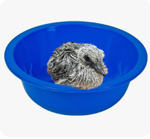 Kind-hearted folks often try to raise orphaned wild birds on their own. When they finally present them to rehabbers like me, it is often because they sense that things aren’t going well. Domestic cage bird breeders often hand-raise their avian infants, so they occasionally face similar issues.
Over the years, many young birds have come to me with long-standing foot and leg problems. The most common cause is keeping these nestlings or adults on unsuitable surfaces.
Many folks think that because a kitchen bowl is nest-shaped, it’s a good substitute for a nest. They might add a layer of paper towels, Kleenex™ or shredded newspaper to the bottom. But those materials quickly pack down into a firm, impervious surface, and the plastic or ceramic bowl doesn’t allow fecal moisture to percolate out. Most natural nests are built from sticks with an inner lining of finer material to achieve softness. Natural nests retain their porosity. Even in a properly lined bowl, an impervious floor can, over time, put turning/twisting pressure on a young bird’s toenails. That twisting motion slowly twists the bones and joints of the feet as well. Infant birds grow incredibly fast. As they grow in non-ideal containers, those bones lose their proper alignment. That resulted in the twisted, gnarled feet you see in the photo of the white dove above. The first photo is how its legs looked on arrival. The second is many weeks after surgery. It is not a wild dove. It is a domestic albino ringneck dove that was brought to me because it couldn’t walk or perch. Not only were its toes incapable of perching, but the femur bones of its upper thighs were also abnormally curved.
By cutting those bones, realigning them, and putting its legs in temporary braces, I got this dove to walk again. But it will never perch normally. We keep him in a cage designed for birds with disabilities. The cage has easy access to several food and water containers and a very padded floor to keep him from developing pressure ulcers on his breastbone (sternum). Improper bone alignment is also a recipe for early-age arthritis. Five years have passed, and he still seems happy and content. Angel serenades my wife every morning. But I must check his feet frequently to be sure that none of his misaligned toenails have overgrown. The quick of birds’ toenails is much closer to the tip of their claws than it is in dogs and cats. So you can remove very little at a time unless a cautery is handy. Pressing the tip of a clipped avian toenail into a moist bar of Ivory soap will also stop any bleeding. But not nearly as reliably.
On my site, you will find many articles describing how I improved or corrected bird leg and foot problems. Or, you can take some photos and send them to me, and I’ll tell you what your options might be.
About The Author:
Dr. Ron Hines DVM PhD
My name is Dr. Ron Hines, and I am a retired veterinarian in Brownsville, Texas, who provides low-cost or free online consultations to pet owners worldwide.
A trusted veterinarian you can see in person in your town is as important to your pet’s health as a good airplane mechanic is to the success of your next flight. Please use this information wisely to inform yourself – not to diagnose and treat the pets you love. Don’t try to be your own mechanic.

Help Support Us
Dear reader, Besides your donations, visits to the products that Google and others display on this website help defray some of the costs of keeping my articles online to keep you informed. As you already know, sites like mine that intentionally use no AI robots and are not written to Sell You Things are getting harder and harder to find., Best wishes to you and all the little furries that depend on you. Ron Hines